Balance Me. Lifestyle Tracker App Prototype
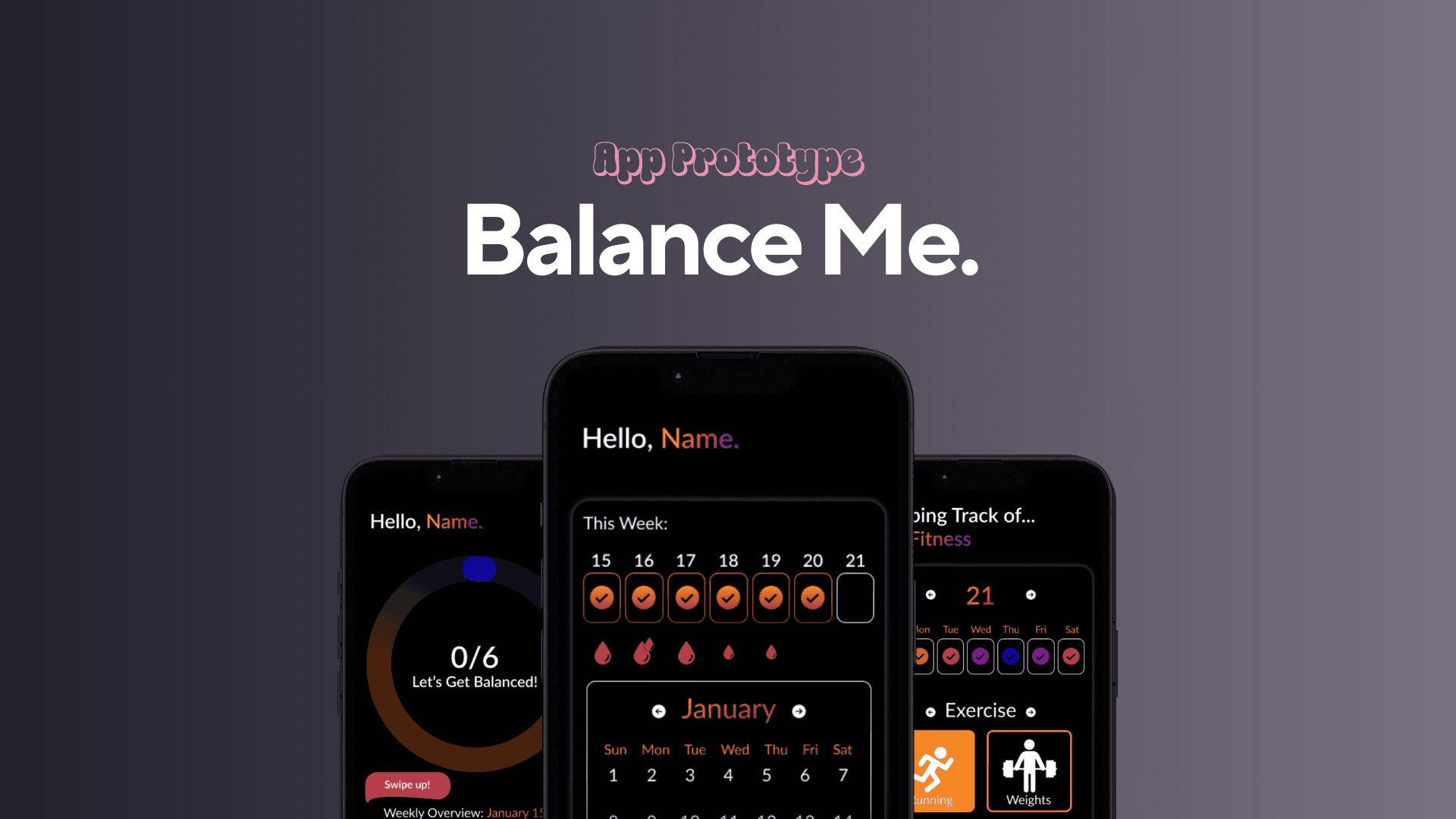
Balance Me. is a lifestyle tracker app designed to help women manage and track key areas of their health—all in one place. Unlike existing apps that only focus on one or two wellness aspects, Balance Me. integrates habit tracking, cycle syncing, symptom logging, mental health check-ins, and more into a single, cohesive platform.
This was a 6-week school project in which every student pitched a unique business idea. I pitched Balance Me. and successfully recruited a team of 9 classmates to bring the idea to life. I led the branding and UI design, built the interactive prototype in Figma, created custom graphics and data visualizations, and served as the lead presenter for our final “Shark Tank”-style pitch.
Client
Entrepreneurship Class Project
Service Provided
Business Ideation and Planning, Pitch Deck Creation, User Journey Mapping, Interactive App Prototyping
The Process
The concept for Balance Me. began with a simple in-class prompt: identify a real problem and create a business to solve it. With a deep personal connection to the issue, I envisioned a holistic wellness tracking app—something I wished existed during my journey managing Endometriosis. Having recently completed a redesign of the Yelp app, I had discovered a love for Figma and wanted to challenge myself with another full prototype. After forming the idea, I created an infographic pitch and presented it to the class. The response was overwhelming—in the best way. Nine students left their own project ideas to join mine, forming a 10-person team. While the support was affirming, it also meant I had to quickly shift into a leadership role, organizing a large team under a tight 6-week timeline. Because this was an entrepreneurship course and I was the only designer, I took full ownership of the visual execution. I built the app prototype in Figma, developed the branding in Procreate and Canva, and created custom data visualization graphics for our pitch. At the same time, I delegated research, writing, and business planning tasks based on each teammate’s strengths, offering guidance and structure so everyone could contribute meaningfully. Each week, our team tackled a new section of the business strategy plan while iterating on the prototype and presentation deck. We conducted multiple rounds of revisions, implemented feedback from peers and instructors, and refined both our product and our pitch over time. The collaboration, adaptability, and focus on user-centered design made this one of the most rewarding group projects I’ve ever led.
1
The Challenge
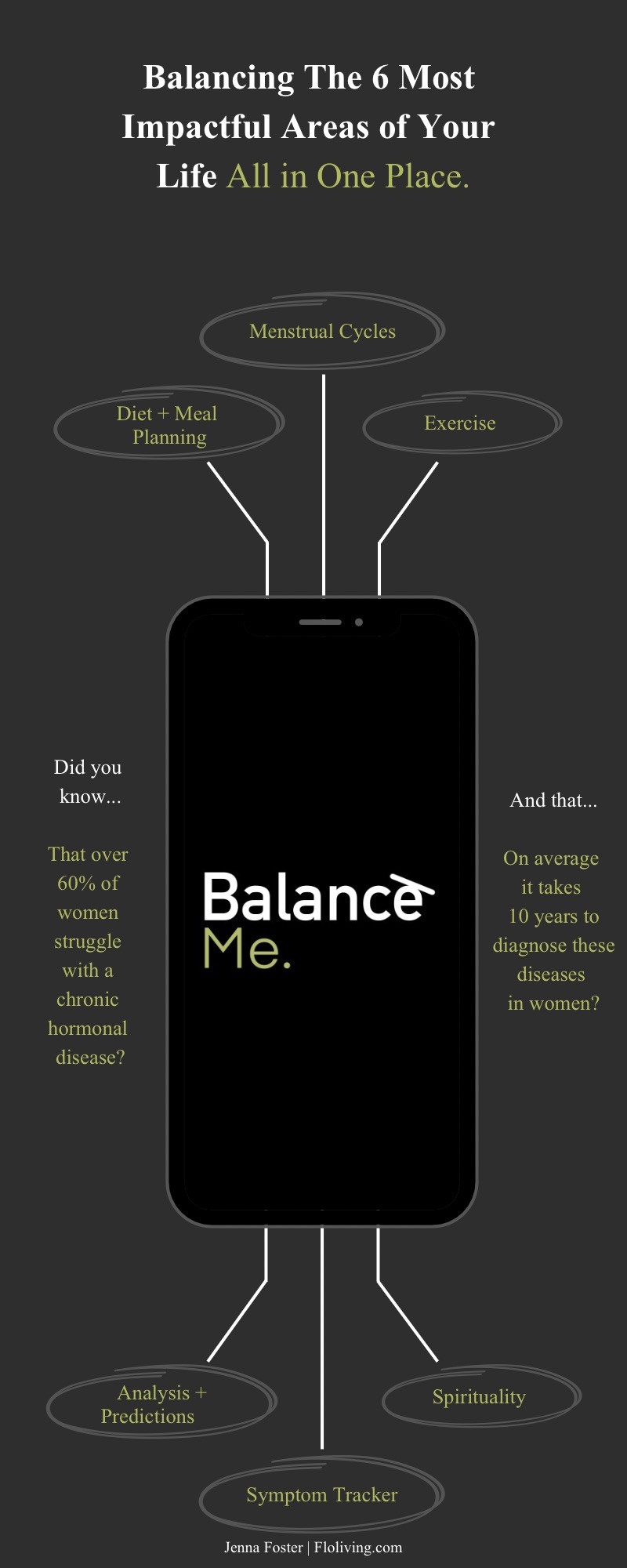
Balance Me. was born out of a deeply personal need: while navigating my own journey healing from Endometriosis, I was frustrated by the fragmented experience of using multiple health-tracking apps. I had six separate apps on my phone—each tracking different things like food, workouts, symptoms, thoughts, and cycle data. It was overwhelming, inefficient, and made it nearly impossible to observe trends or make meaningful connections across different areas of my health. This wasn’t just my struggle. Over 60% of women in the U.S. experience some form of chronic hormonal imbalance, and the average time to diagnosis is nearly 10 years. Much of this delay is due to a lack of education and insufficient personal data. Balance Me. aimed to close this gap by empowering women with a single, integrated app that helps them monitor lifestyle factors, observe patterns, and communicate more clearly with healthcare providers. Our target users were menstruating women, especially those dealing with chronic conditions, who need a smarter, simpler way to track their health. The goal of the project was to validate the business idea, build a compelling app prototype, and secure class-based funding via a final pitch presentation. While our team came in second place, the experience confirmed the concept’s resonance and real-world potential.
2
Research & Discovery
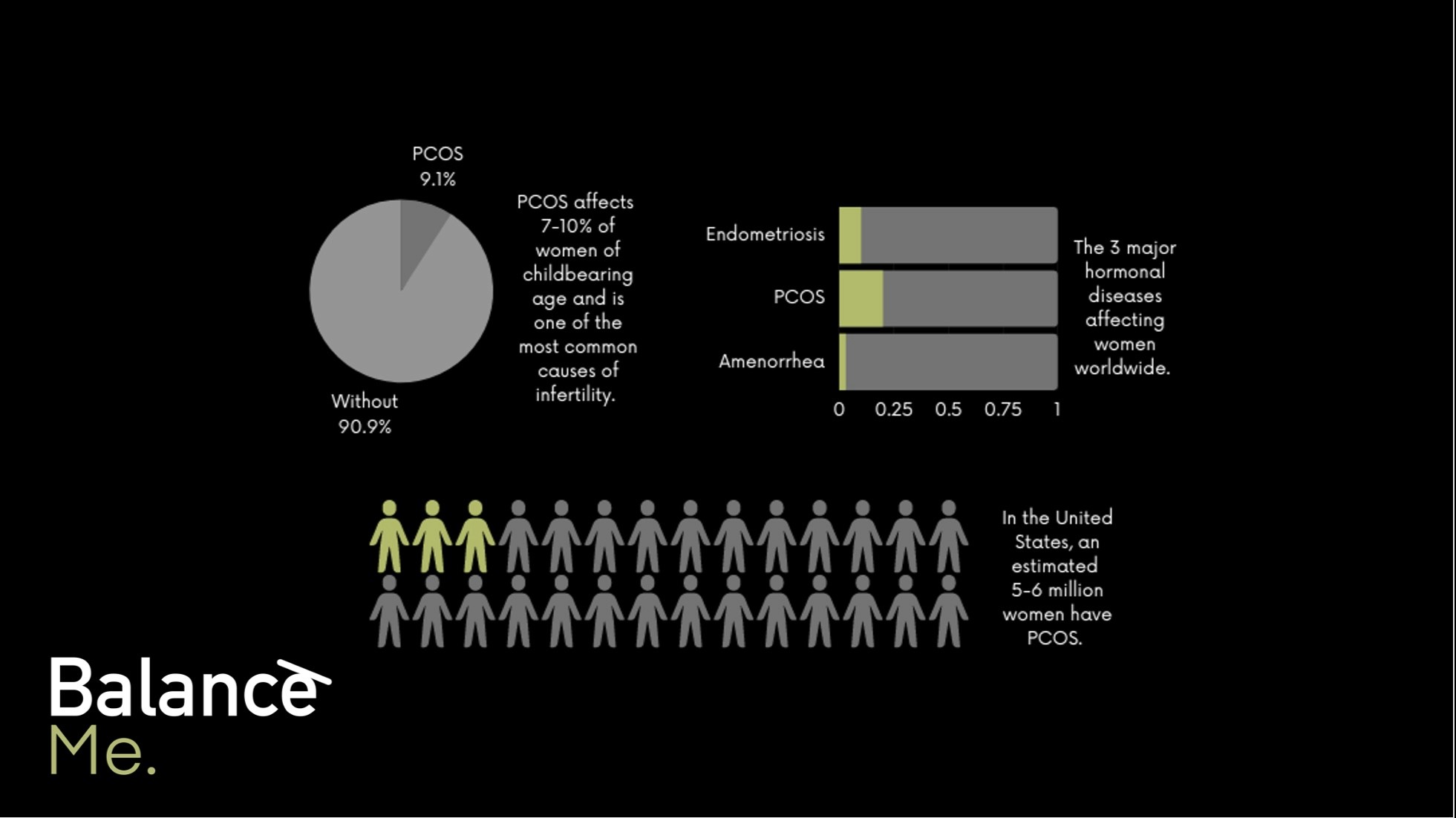
To validate the concept and gather insight into our target audience, our team created a survey that reached over 100 respondents within a week. I delegated outreach to three team members, and we collected data on current health app usage, unmet needs, and overall interest in a comprehensive wellness tracker. The results shaped not only our feature set but also our branding—helping us choose a color palette and tone that resonated with women in our target demographic. Because Balance Me. was designed to fill a gap in the market, we focused our competitor research on apps that partially addressed this space, such as cycle and symptom trackers. These apps, while popular, had limited scope and didn’t integrate habit-building, mindset tracking, or broader health patterns. Their shortcomings reflected my own frustrations—and further validated the need for an all-in-one solution. The final feature set for Balance Me. was heavily influenced by my lived experience, then strengthened by survey responses and team brainstorming. We aimed to provide a tool that felt both functional and empowering, with features chosen to support whole-person health.
3
Final Deliverables
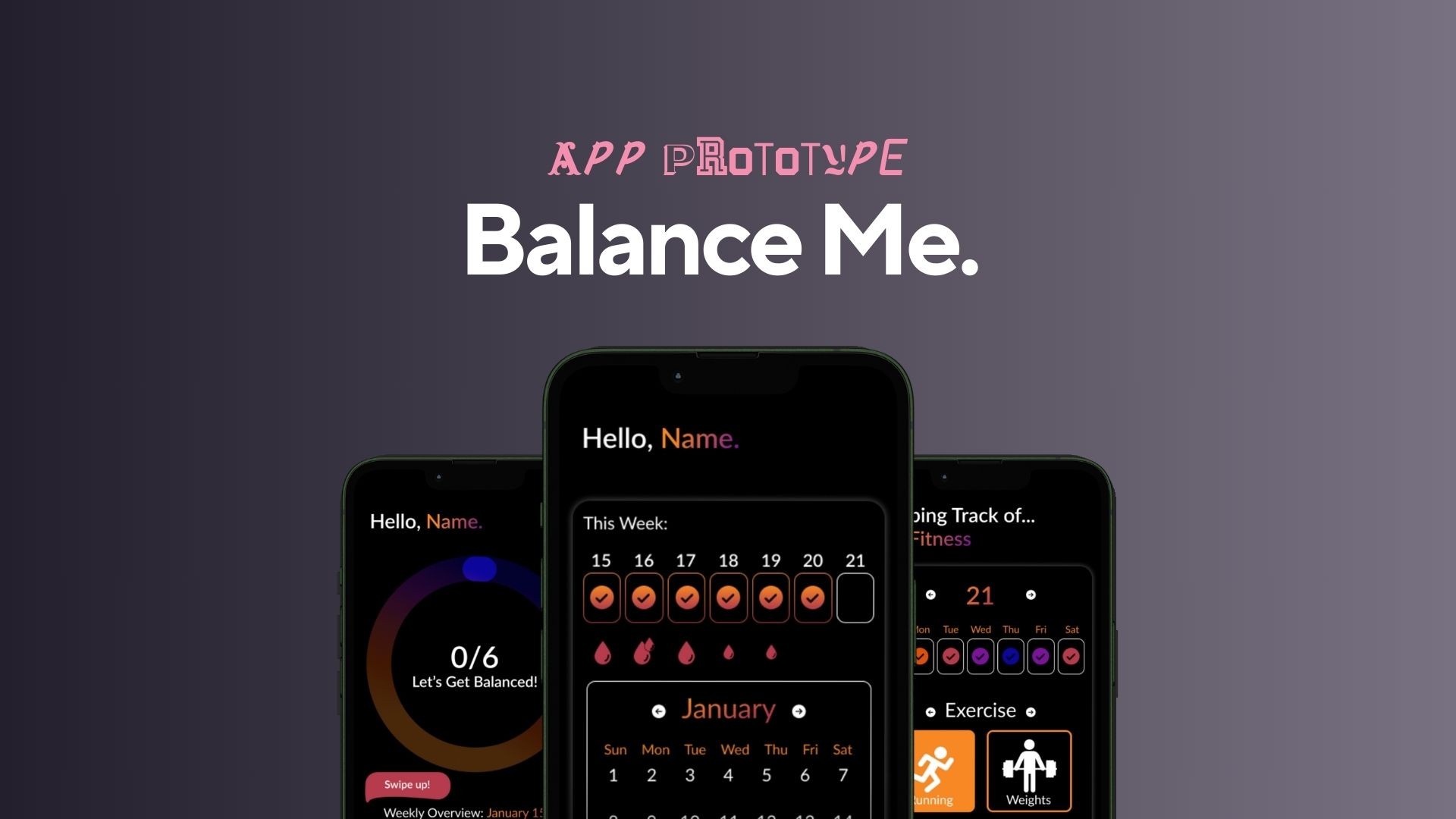
Our final deliverables included a polished, high-fidelity prototype of the Balance Me. app, a professional pitch deck, and a comprehensive business strategy document. The pitch was delivered to a panel of “Shark Tank”–style judges as part of the final evaluation. The deliverables included: - A fully interactive Figma prototype - A slide presentation highlighting the problem, market opportunity, user flows, and branding - A three-year business projection plan with financial modeling - User journey maps outlining pain points and app touchpoints These materials combined design thinking, business strategy, and storytelling to showcase the concept’s real-world potential.
4
Outcome & Results
Our pitch was unanimously approved by the initial panel of judges, earning us a spot in the final round of the competition where we presented to a second panel for a chance at $3,000 in seed funding. While we ultimately placed second, the judges responded positively to the idea, our execution, and the prototype’s depth. Realistically, we would have needed far more than the offered funding to begin app development—so we were genuinely happy to see the award go to a team that could put it to immediate use. The experience left a lasting impact on both me and the team. What started as my individual vision quickly became a shared mission, and by the end of the semester, it was clear how personally invested each team member had become. It was a bittersweet moment to close the project—many of us felt like we were just getting started. Preparing a compelling team-based pitch under three minutes was a new challenge for me. I had to learn how to balance structure, timing, and shared speaking roles for a group of seven, which stretched my skills in presentation planning and team trust. Presenting twice with such a collaborative group gave me practice in stepping back, empowering others, and celebrating what we built—together.
5
Reflection
This project stretched me in all the right ways—as both a designer and a leader. I’m often the one who takes initiative in group work, but this was the first time I led a team this large, and the only one with design experience. That meant not only carrying the creative execution, but also managing the team, assigning roles, and keeping everyone engaged and valued. One of the most difficult parts was figuring out how to delegate effectively so I could stay focused on designing the core product. I had to be resourceful and intentional about matching people with tasks they could succeed in and feel ownership over—even when their experience was limited. This challenged me to grow as a communicator, a collaborator, and a mentor. More than anything, I learned the importance of trust. I had to let go of doing everything myself and rely on my teammates to contribute in their own unique ways. And they did. What began as my individual vision became a shared mission—and one of the most encouraging team experiences I’ve ever had. Balance Me. not only helped me refine my design process and leadership skills, but it reminded me why I love building things that matter.
6
Recent Designs